Kurashiki | Okayama’s Charming Canal City with Artisan Denim & Life-Changing Pudding
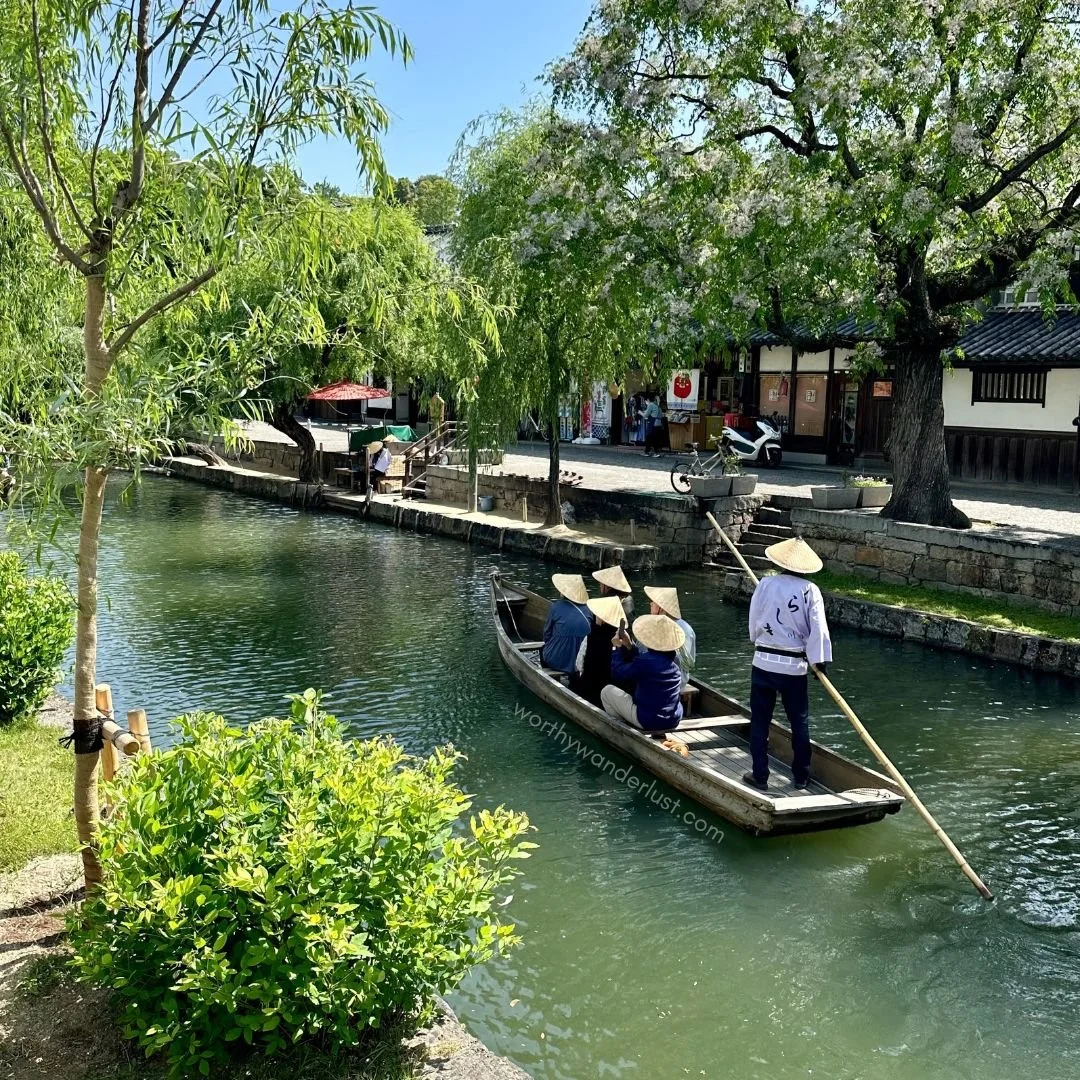
Nestled in Okayama Prefecture in western Japan, Kurashiki might be known to some as a little Venice of Japan but is still refreshingly off well-worn tourist tracks.
With no crushing crowds or queues that made us question our vacation choices, we were able to wander through its Edo-era streetscapes and picture-perfect canal scenes with peaceful ease and wide-eyed wonder.
The city’s strong artisan culture and warm locals have also left us with memories we still fondly reminisce about.
In this guide, I share the best things to do, where to find life-changing pudding, and other personal tips to help you make the most of this underrated gem. Come join me!
Linked websites may be in Japanese, but can be translated via your browser.
WoWa Notes
This post reflects my personal opinions and research as of 15 March 2026, and is not sponsored; I suggest verifying information directly with operators before visiting. I generally share experiences I’ve done and genuinely recommend, and indicate otherwise if this is not the case.
The post contains affiliate links, which means I may earn a small commission, at no extra cost to you, if you book through them. Your support would help me to keep sharing helpful guides and would be much appreciated (thank you!).
One. Best things to do in Kurashiki Bikan Historical Quarter
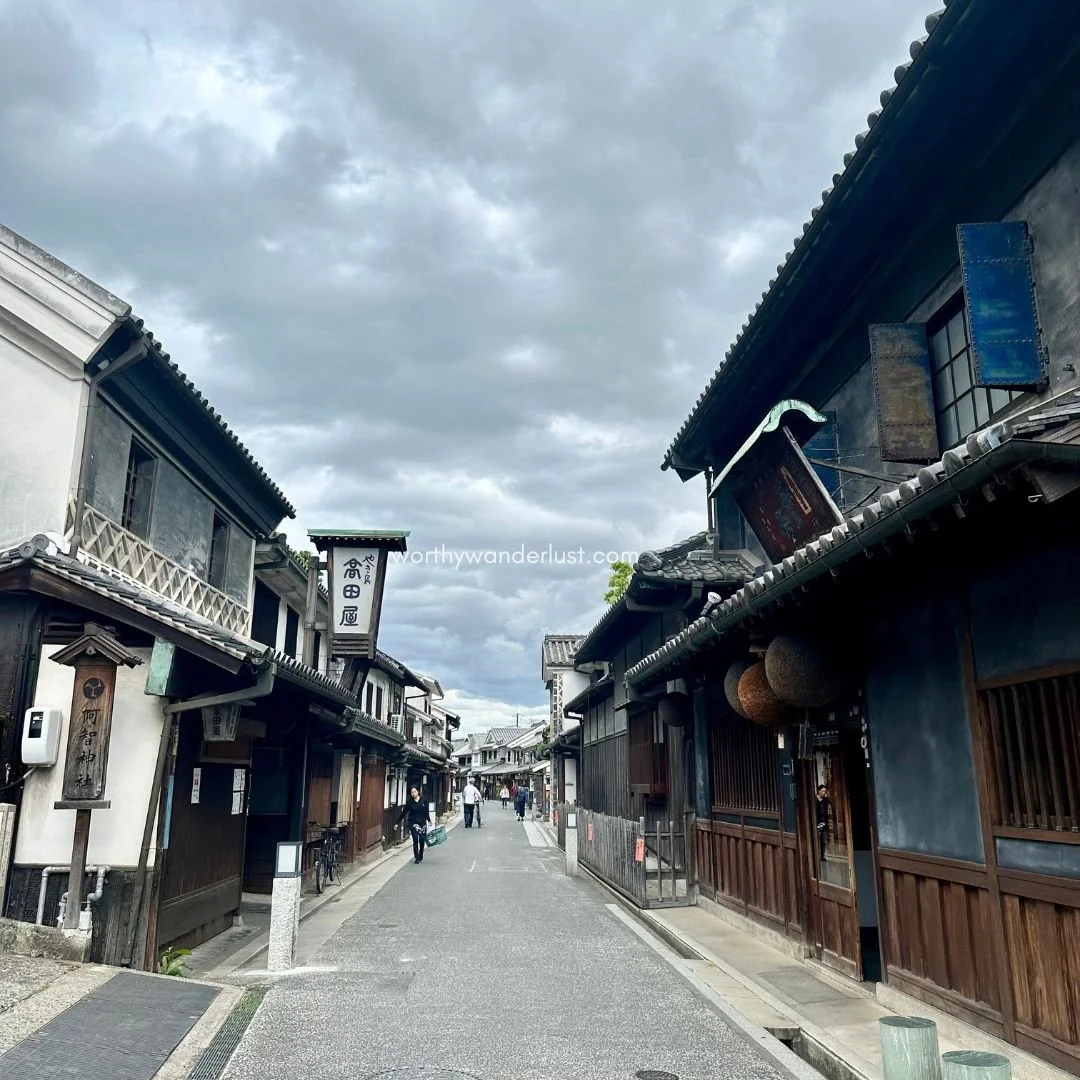
I felt like I was in a living, breathing film set!
The Bikan Historical Quarter is no doubt Kurashiki’s heart and soul. Its history dates back to Japan’s Edo period, when it thrived as a merchant city and a port of call for trading ships.
The quarter’s distinctive storehouses with namako-tiled white walls now house cafes, craft shops and galleries, while its riverside scenery remains an icon of this heritage city.
Here’s what I recommend doing here:
Don a gorgeous kimono
I felt like I was stepping back in time, and took the chance to soak up the experience by looking the part too!
I headed to Vasara, a kimono rental store that’s located at Ivy Square, one of the quarter’s most striking landmarks. Originally built in 1889 as a cotton spinning factory, the red-brick Ivy Square has been transformed into a vibrant complex with a hotel, craft studios and retail space.
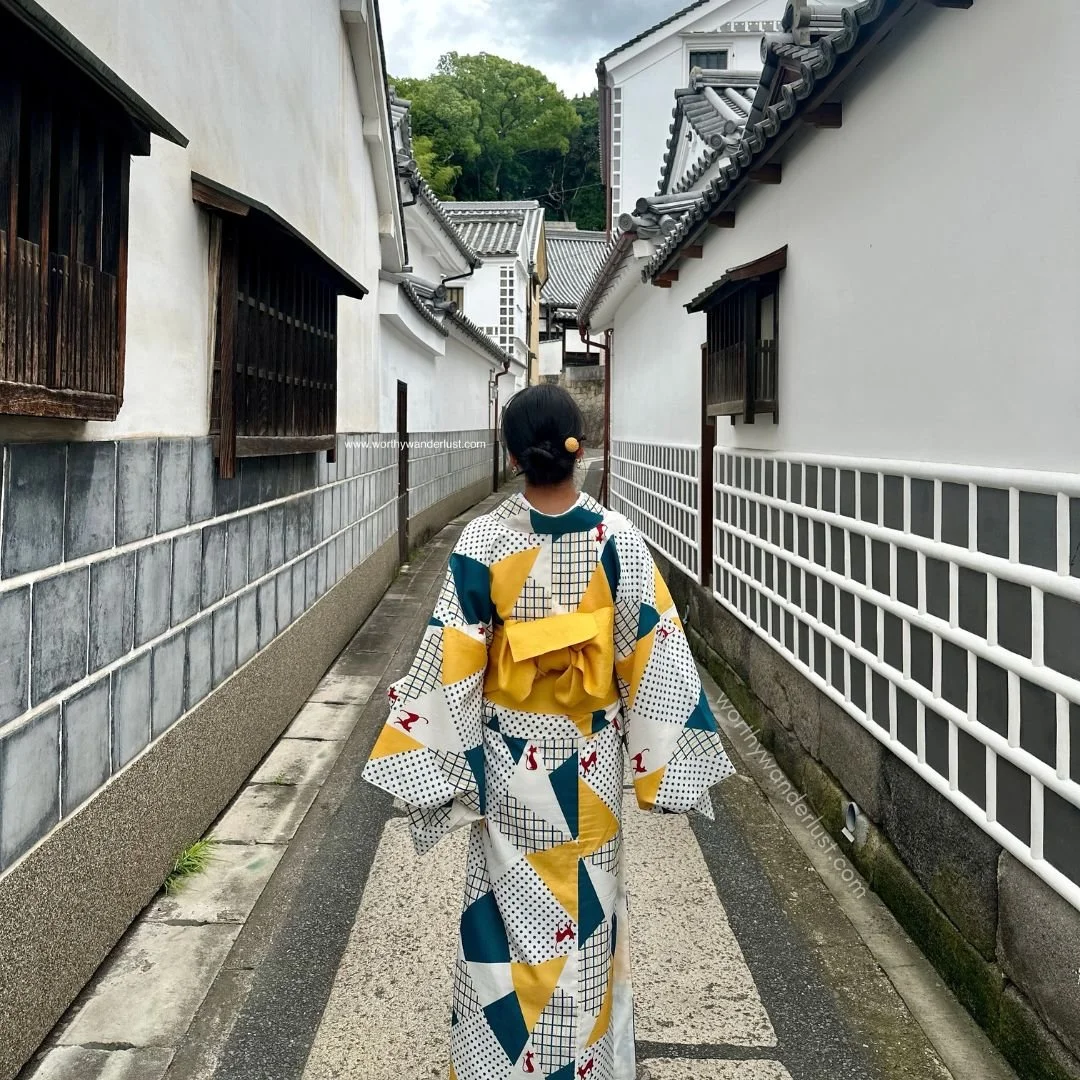
In a setting like this, I was eager to look the part! 👘
The basic rental packages often feature simpler, solid-colour kimono or summer-time yukata, with prices stepping up for more elaborate designs.
The kimono I chose (spot the cats 🐾) was one tier up, though I managed to drag myself away from add-ons like matching handbags and hairpins that all cost extra. It’s certainly easy to get carried away!
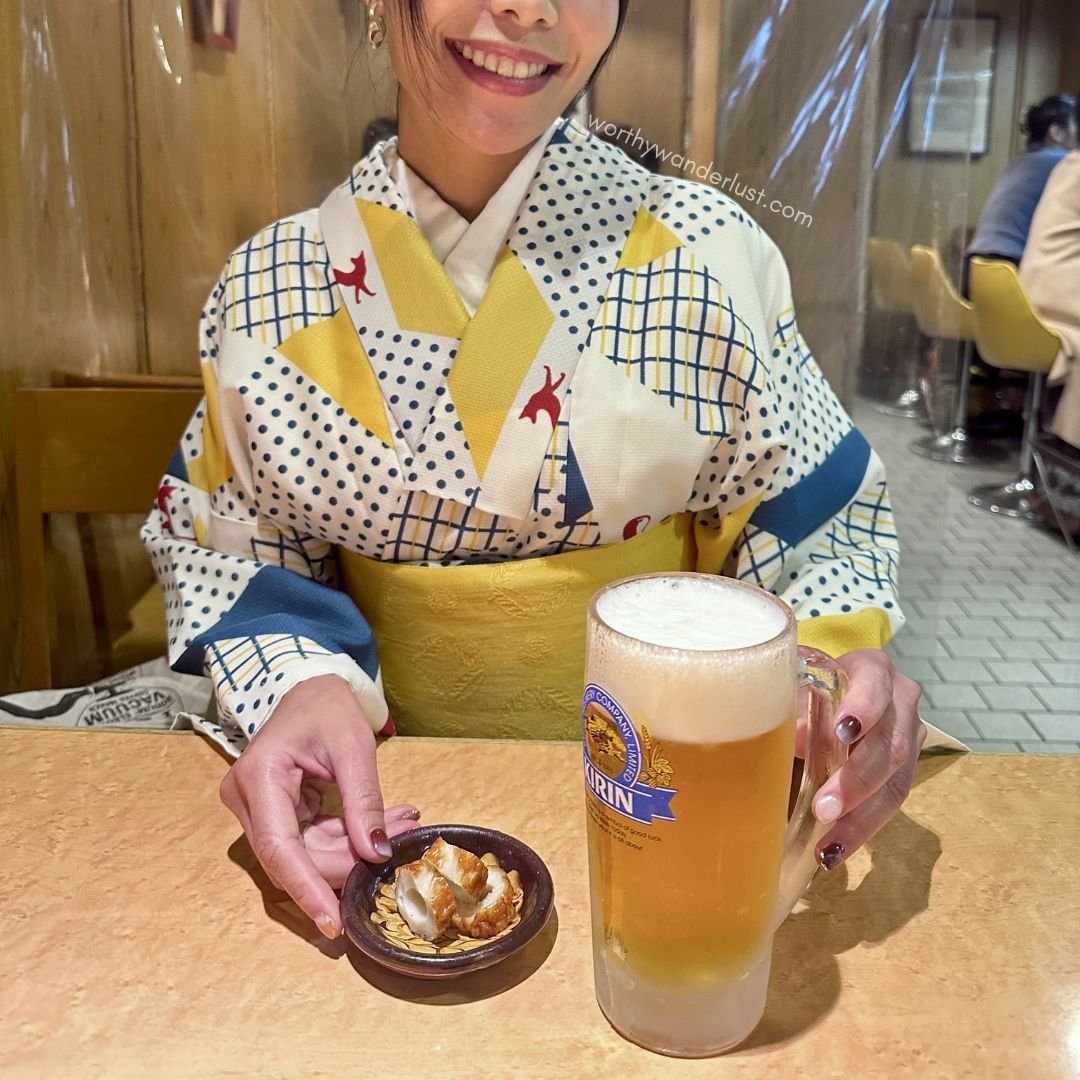
Relaxing with a pint… getting dressed in a kimono was quite a process! 😜
WoWa Tip
Most kimono rental shops are open from around 10 am, with returns typically required by late afternoon; factor this into your day's schedule if you plan to explore in character!
Tour a traditional sake brewery
Morita Brewery is a long-standing sake producer that prides itself on using time-honoured techniques to gently craft quality sake, avoiding machines whenever possible.
For an insider’s perspective, don’t miss their guided tour that’s available only in the brewing ‘off season’ (Apr-Oct, when the brewing equipment isn’t in use). Bud, the excellent English-speaking brewer and guide, brings the process to life with pictures and detailed explanations.
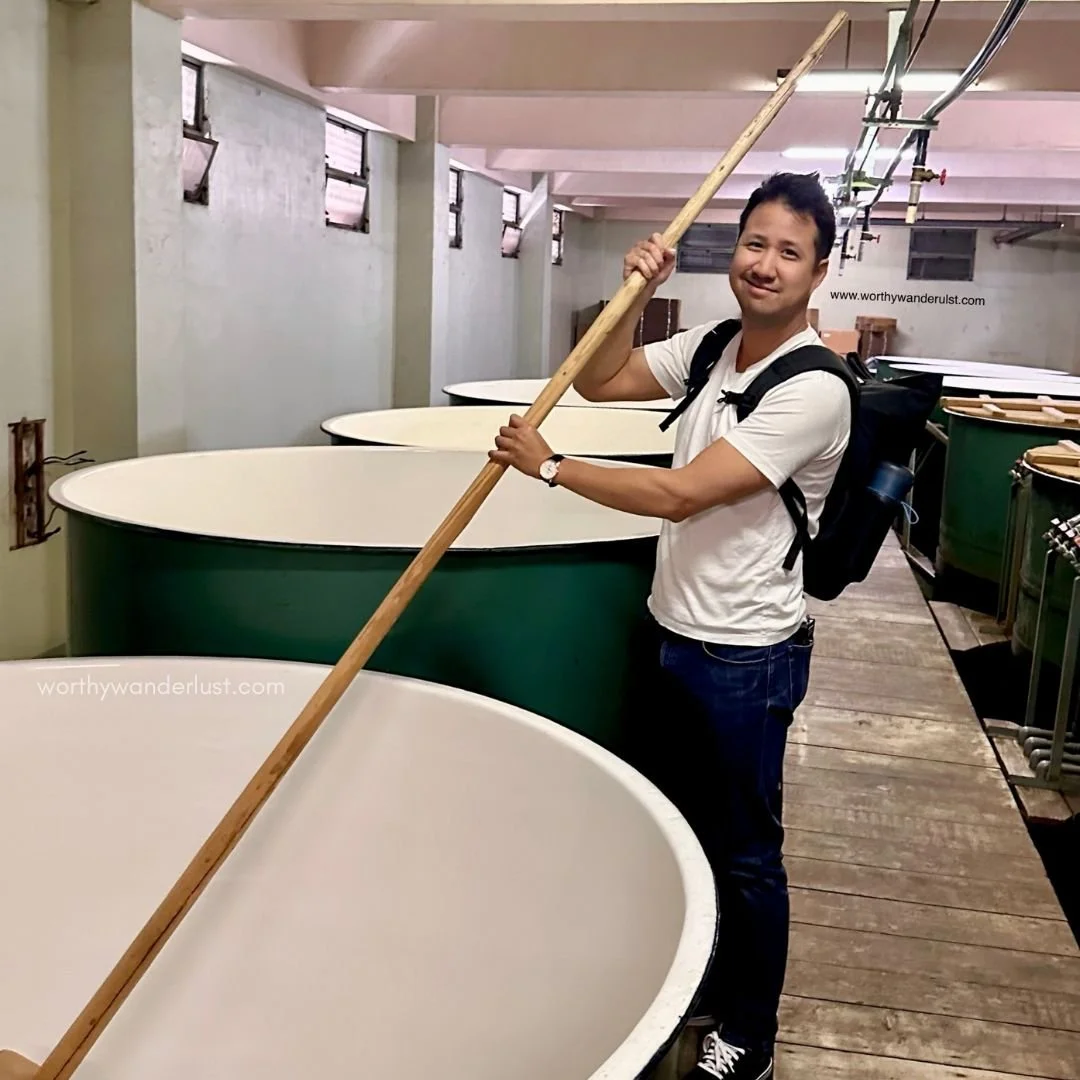
My partner got a taste of being a sake brewer, before Bud stepped in to correct his technique!
The brewery tour aptly ends with a tasting of their signature sake varieties, as well as a trendy yuzu sake. It certainly made us thirsty for more, so we headed to their retail store next door to pick up a bottle!
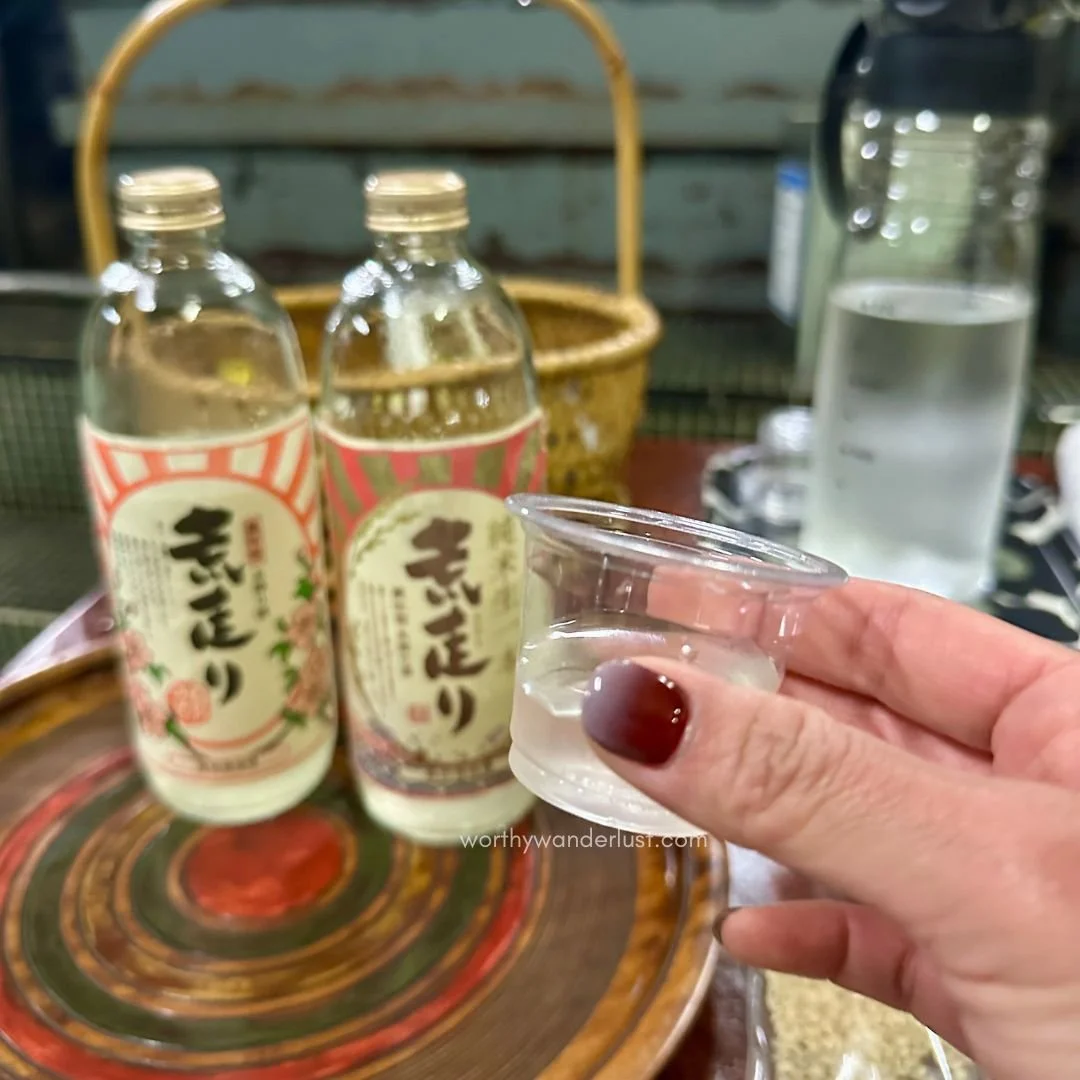
The best kind of finish line.
WoWa Tips
How to book: The tour must be booked in advance costs ¥1500 each as of March 2026. Find booking details on their website (translate via browser).
Cedar balls: Keep an eye out for hanging cedar balls at the entrance—they signal that sake is produced or sold inside. The balls are hung green when a new batch is being brewed and as they slowly turn brown, it's a sign that the sake is ready to drink (yay!).
Stroll or glide along Kurashiki River
A leisurely stroll alongside Kurashiki’s central waterway, with its leafy, stone-lined banks and arching bridges, is a must (and it wouldn’t even cost a cent).
It’s even more atmospheric and soul-comforting if you can time your stroll at sunset, like we fortunately did!
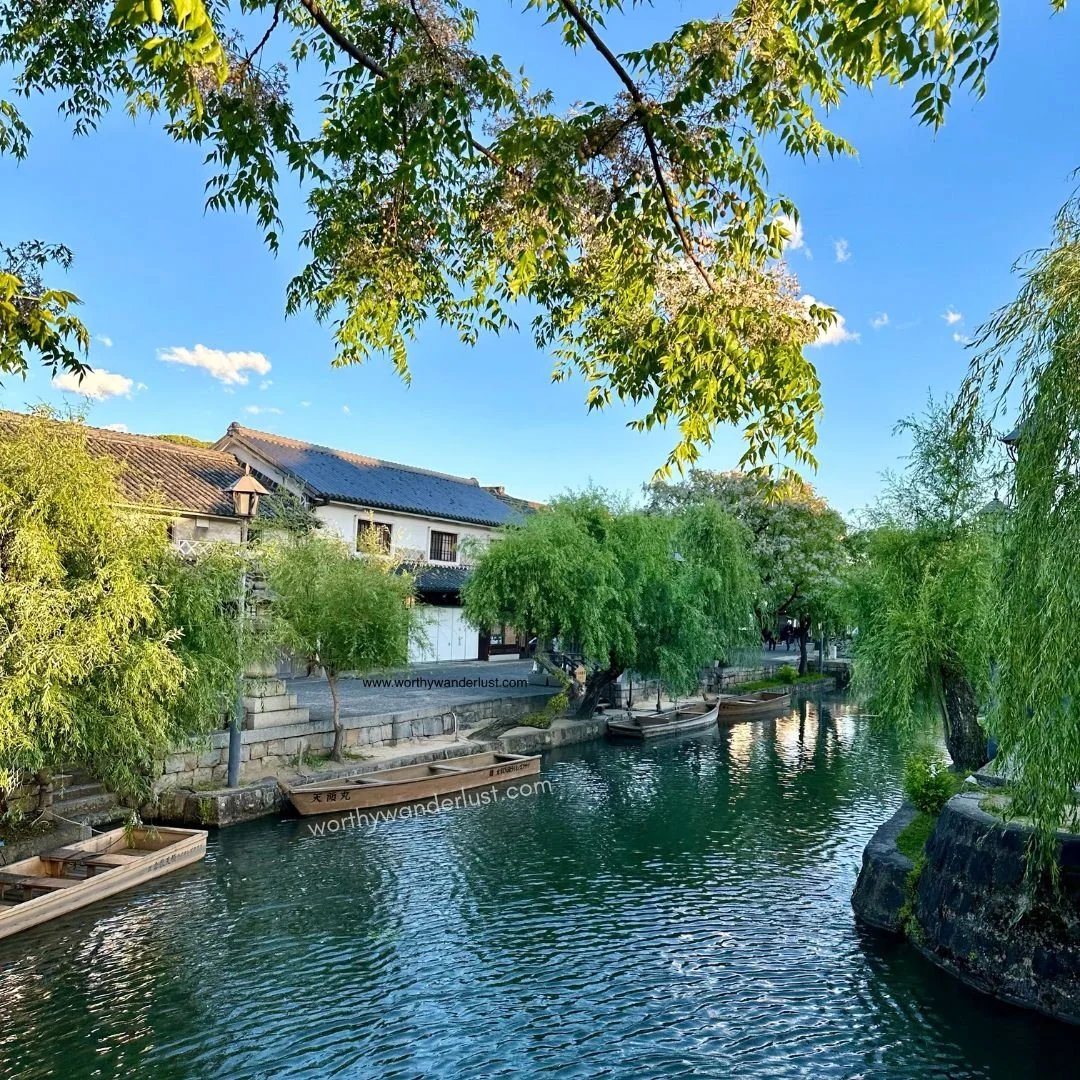
Whether on foot or aboard a riverboat, the Kurashiki River area is a fine place to be.
For a different perspective up close to the water, you can rock a straw hat and climb aboard one of the small riverboats (we decided to stick to dry ground this time!).
Guides in traditional attire add a theatrical touch, even if the commentary is only in Japanese.
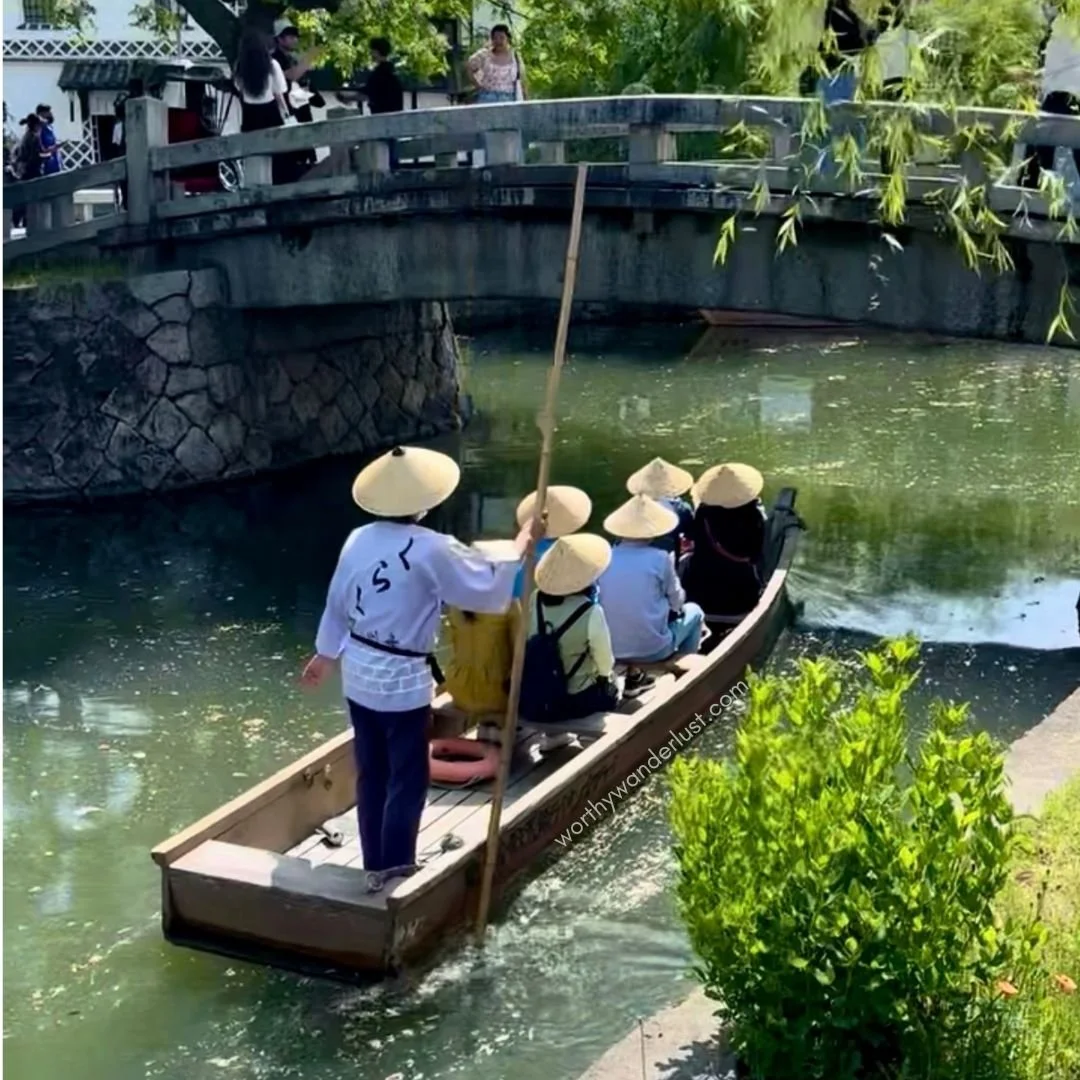
The straw hats serve as both a fun prop and sun protection (I approve!).
WoWa Tip
Riverboat tickets can be purchased at the Tourist Information Centre located in the historical quarter, and cost a reasonable ¥700 each for adults (as of March 2026).
For the most reliable information, including operating hours, check the official website (translate via browser).
Venture up to Achi Shrine
Venture up to Achi Shrine, perched atop Mt. Tsurugata, for a higher vantage point and an elevated heart rate.
The roughly 200 stone steps are well worth it for fresh air, a tranquil atmosphere, and sweeping views over the white-walled cityscape.
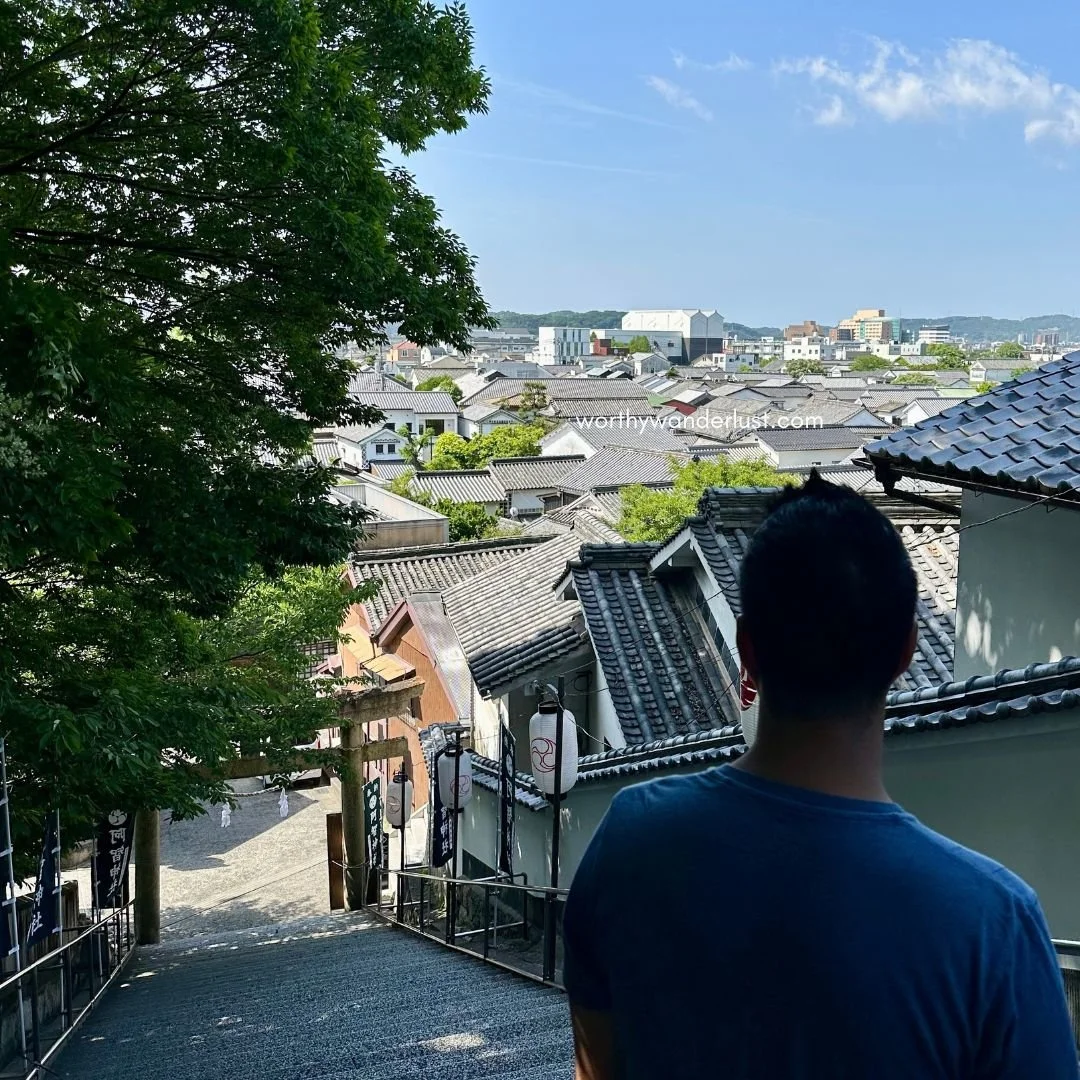
Taking in the quarter’s distinctive views on our way up to Achi Shrine.
The shrine's most well-known resident is an ancient Akebono wisteria tree that’s estimated to be a staggering 300 to 500 years old and is designated a natural monument of Okayama Prefecture.
According to an information sign at the shrine, the tree usually blooms in mid-April; since we were there in May, we unfortunately missed it in its flowery glory.
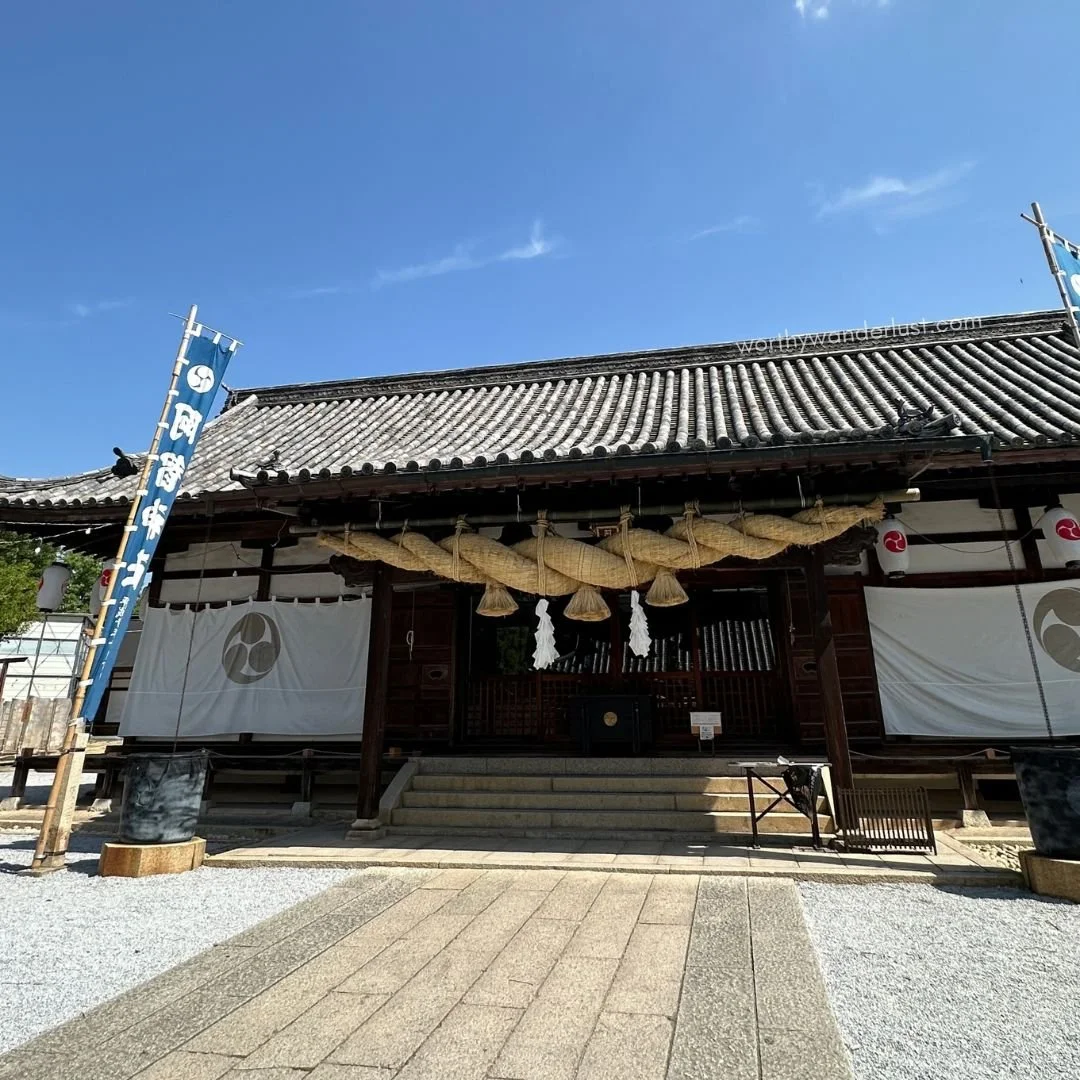
Achi Shrine on a beautiful morning. We’d love to return during peak wisteria season!
WoWa Tip
Here are two other attractions I would consider visiting if I had more time:
Ohara Museum of Art: Japan's first private Western art museum with a Greek temple-style exterior (closed for renovations till at least April 2026).
Ohashi House: A well-preserved merchant townhouse that dates back to the 18th century and is designated a national important cultural property.
Shop for local artisan goods
Kurashiki genuinely surprised us on the shopping front — and some of our favourite Japan purchases came from here! Here are two types of goods that stood out for us:
Denim
Kojima, a district in Kurashiki, is the birthplace of Japanese denim: in the 1960s, craftspeople there, drawing on centuries of textile-making and traditional indigo dyeing heritage, became the first in Japan to produce domestically-made denim jeans.
Denim seems so integral to the city’s identity that it deserves its own section; scroll just a little further for where to shop.
Washi tape
The humble masking tape gets a major glow-up in Kurashiki, and I am so here for it. Decorative washi tape has its roots in this city as well, and blends traditional paper-making craft with contemporary aesthetics.
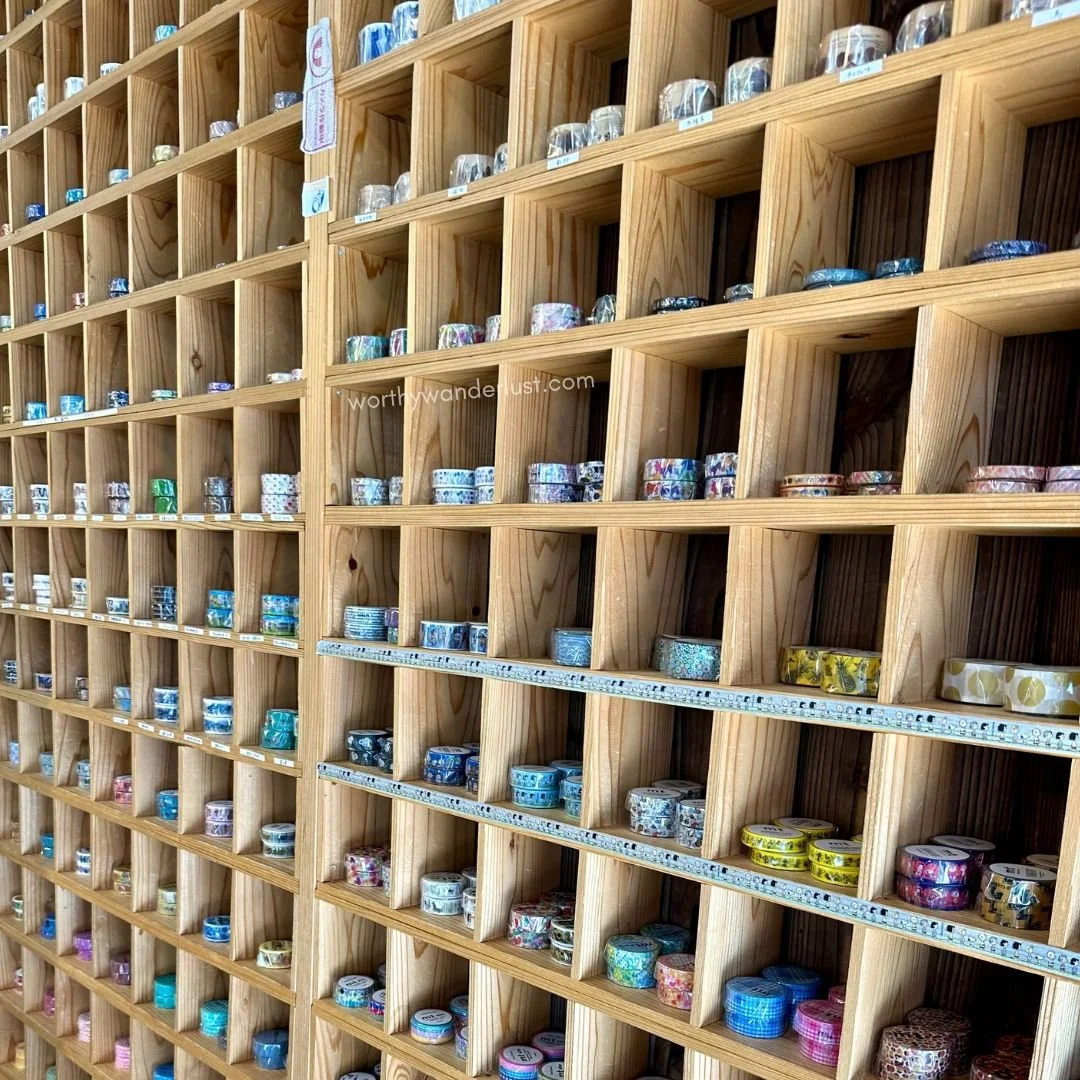
Washi tape comes in an endless array of patterns. I was spoilt for choice!
A great place to pick up a souvenir is Tane, where I found a tape with a design inspired by the historical quarter as well as a few kawaii cat-themed ones (that absolutely called out to me as a crazy cat lady!).
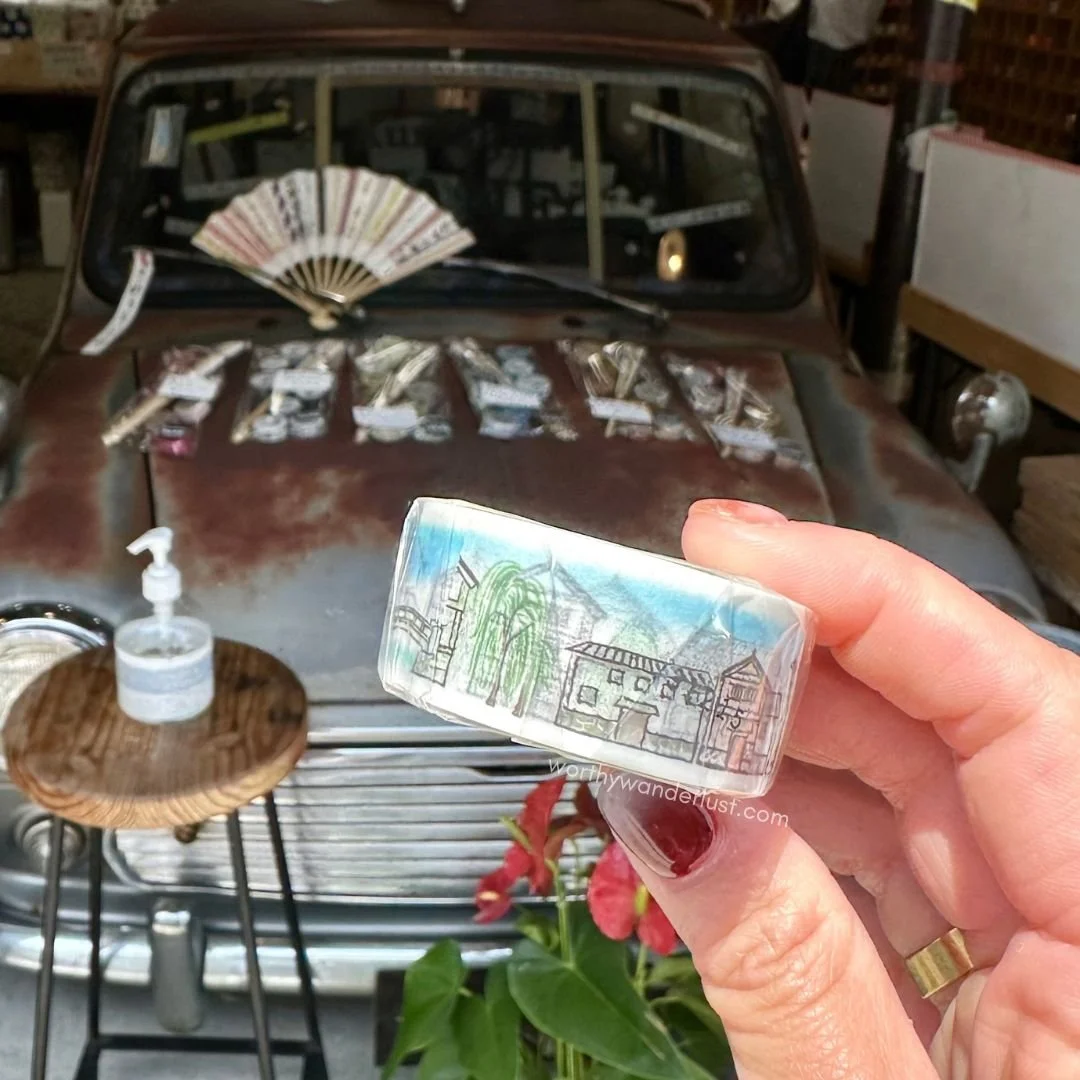
Taking a roll of the historical quarter home with me.😊
WoWa Tip
Beyond denim and washi tape, Kurashiki's artisan goods and craft scene deserves more than a cursory browse. Keep an eye out for Bizen-yaki pottery, Okayama Prefecture's celebrated unglazed ceramic, as well as beautiful Kurashiki Glass that’s crafted using the glassblowing technique.
Two. Where to shop for denim in Kurashiki
If there’s one place in Japan to splurge on premium denim, I’d say it’s Kurashiki!
The Bikan Historical Quarter has a plethora of denim specialty stores, ranging from small yet exclusive ateliers to well-curated retail stores, though denim enthusiasts might want to venture to Kojima.
Here’s where you can get your denim fix:
Heart Made Base
A personal favourite in the quarter is Heart Made Base, which has its headquarters and factory in Kojima. They offer a great selection of locally-made pieces and friendly service that transcended our language barrier.
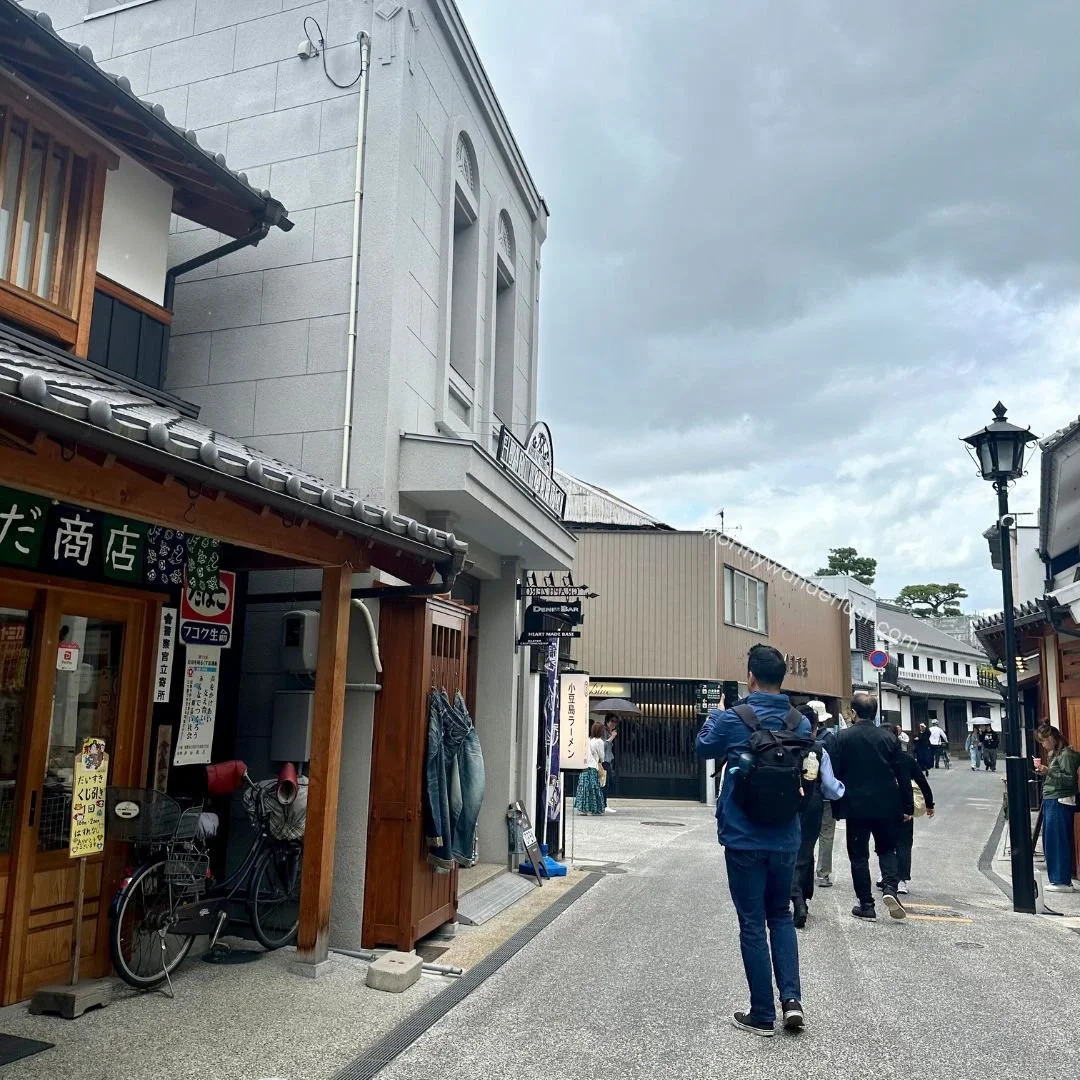
There's my partner in front of the store where he did the most shopping damage during our trip! 🛍️
My partner happily bought two lightweight denim shirts there and was delighted to receive a denim coin purse (made by none other than the amicable gentleman helping us) as a parting gift!
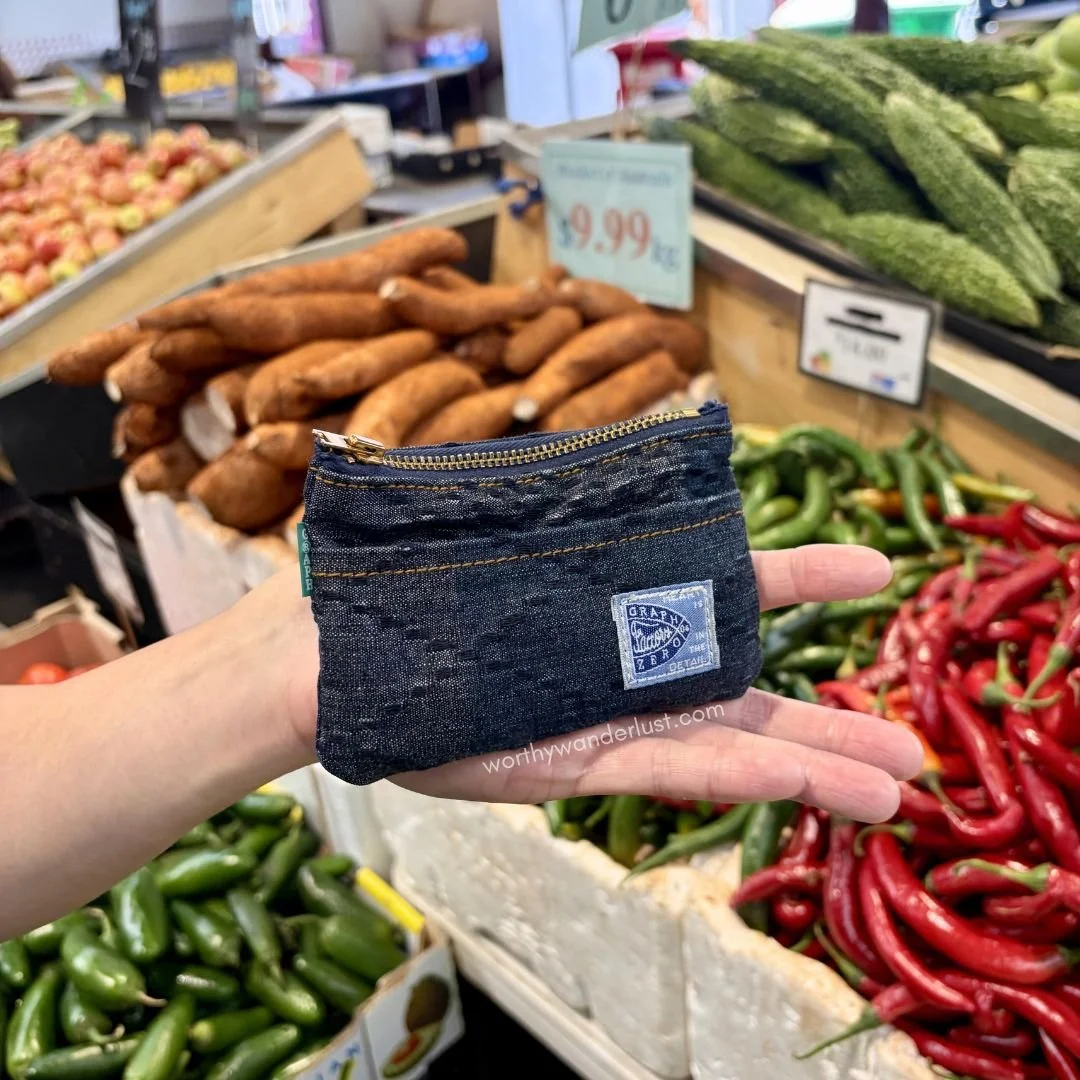
He now uses the coin purse for our market trips back in Melbourne. It was such a lovely and practical memento! 😊
Kurashiki Denim Street
Denim Street is a fun and slightly quirky stretch that captures denim pride in full colour – even soft-serve ice cream and steamed buns get the indigo treatment!
It’s worth a browse and a snack stop, though I’ve noticed not all denim sold here is made in Kurashiki or elsewhere in Japan. If provenance matters to you, I suggest asking before making a purchase (especially if the price seems surprisingly low).
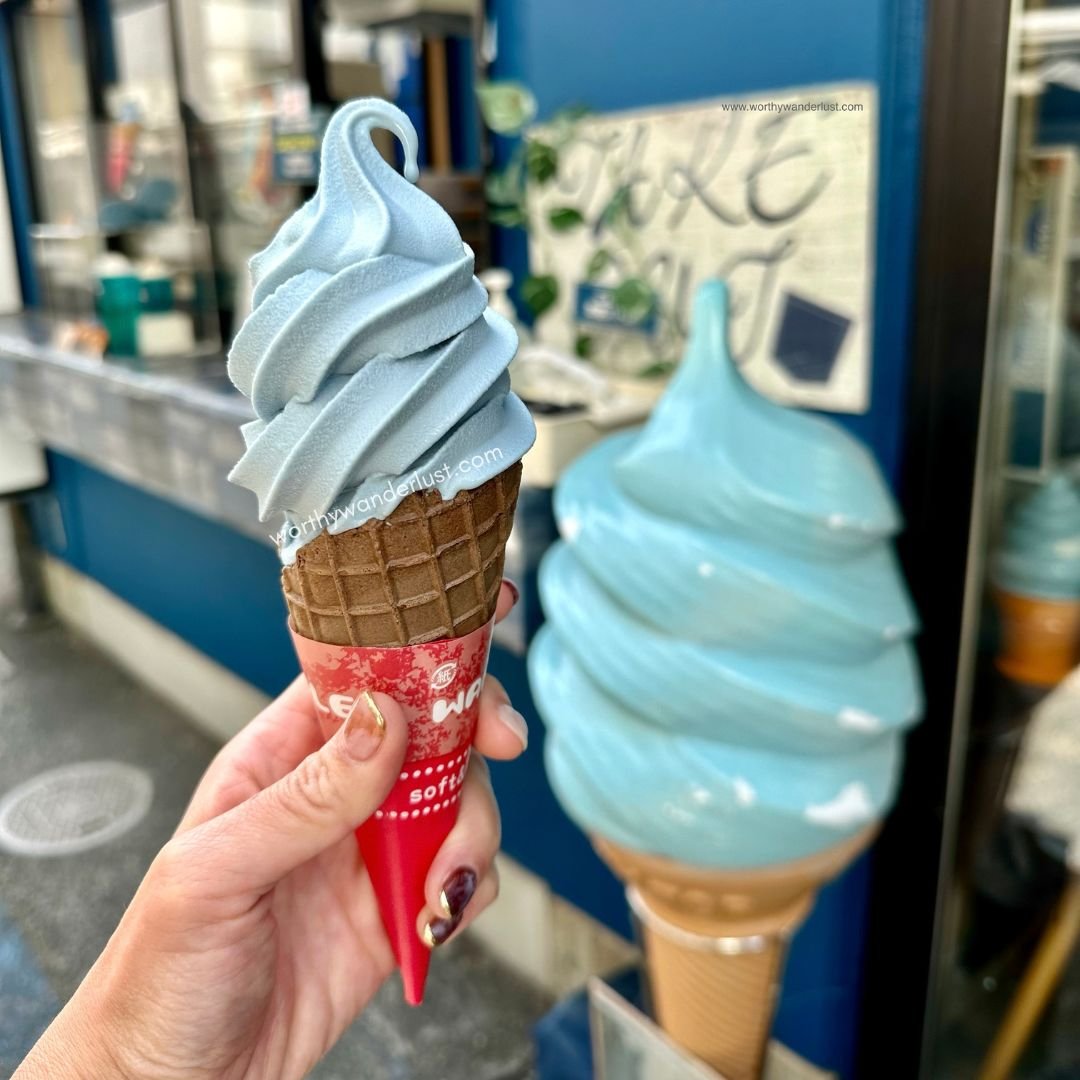
“Denim” ice cream, anyone?
Ivy Square
The picturesque Ivy Square complex is home to a few resident denim ateliers. It sometimes also hosts larger-scale exhibition and sale events where multiple producers gather to offer high-quality Japan-made denim items.
We were lucky to be there during one of these events and my partner, the not-so-secret shopaholic, picked up a pair of locally-made jeans. I still regret not getting a pair too!
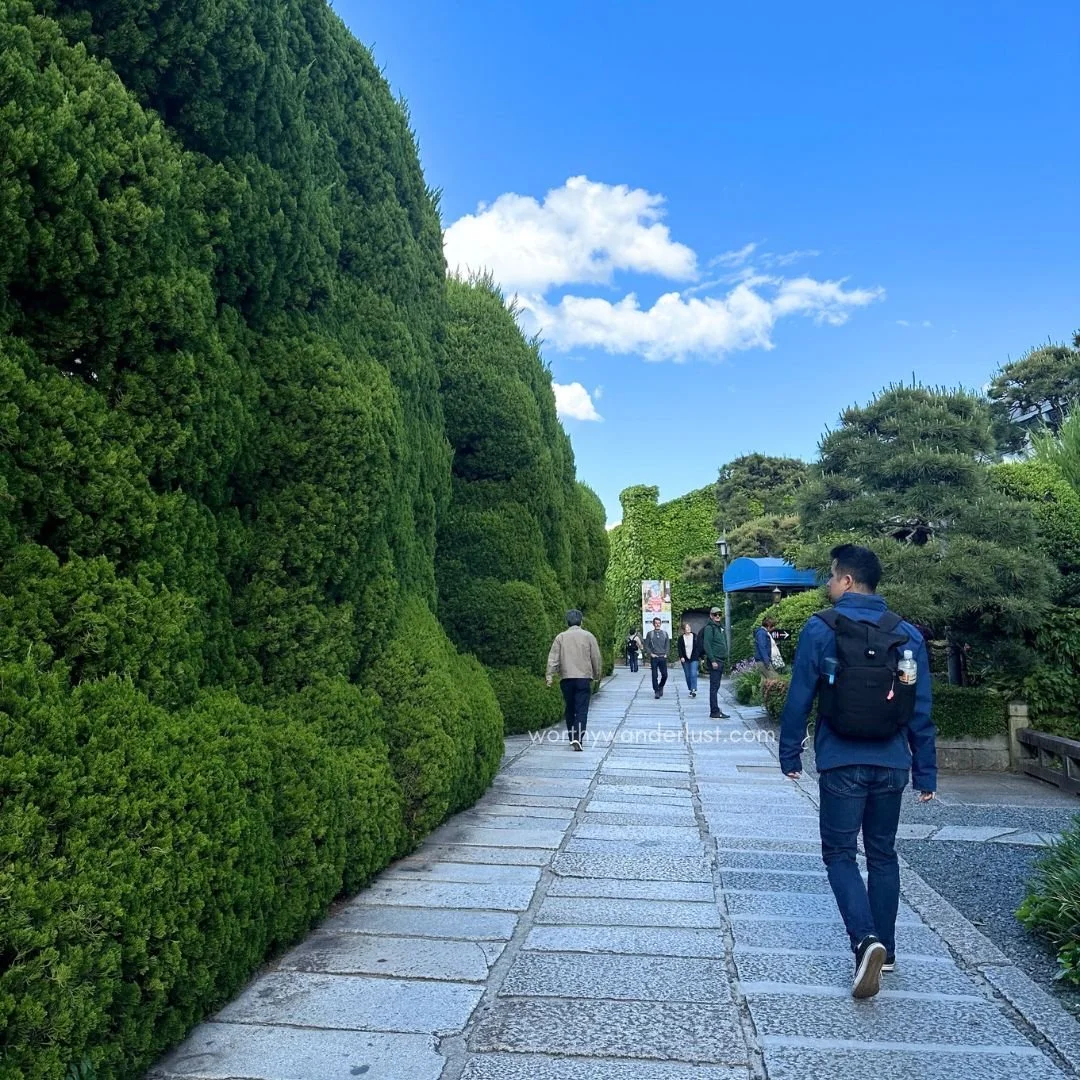
The lush wall of greenery leading to Ivy Square. 🌿
Kojima
While I haven’t ventured to Kojima yet, I reckon serious denim lovers would want to make the trip.
It is the true heartland of Japanese denim production and has a dedicated Jeans Street with flagship stores for renowned brands like Momotaro Jeans and Betty Smith.
There's also the Betty Smith Jeans Museum (free entry), where you can learn about the history of Japanese denim.
WoWa Luxe List
For the ultimate denim experience, you can create your very own original jeans with a master craftsperson and enjoy a private production tour and guided shopping experience in Kojima.
This luxury experience is available through Wabunka, a platform that works with local Japanese artisans and businesses to create private, immersive experiences that are usually difficult for travellers to access. While I haven’t done this experience personally, I’ve added it to my dream list!
Three. Where to eat in Kurashiki
Get a happy dose of pudding at Yuurin-an
Confession: We used to proclaim we weren’t ‘pudding people’… until our first Japanese pudding experience at the popular Yuurin-an that turned us into enthusiastic converts.
We actually first tried their neko daifuku, adorable cat-themed mochi filled with sweet bean paste. They were cute and tasty, but were honestly a warm-up act for what came next.
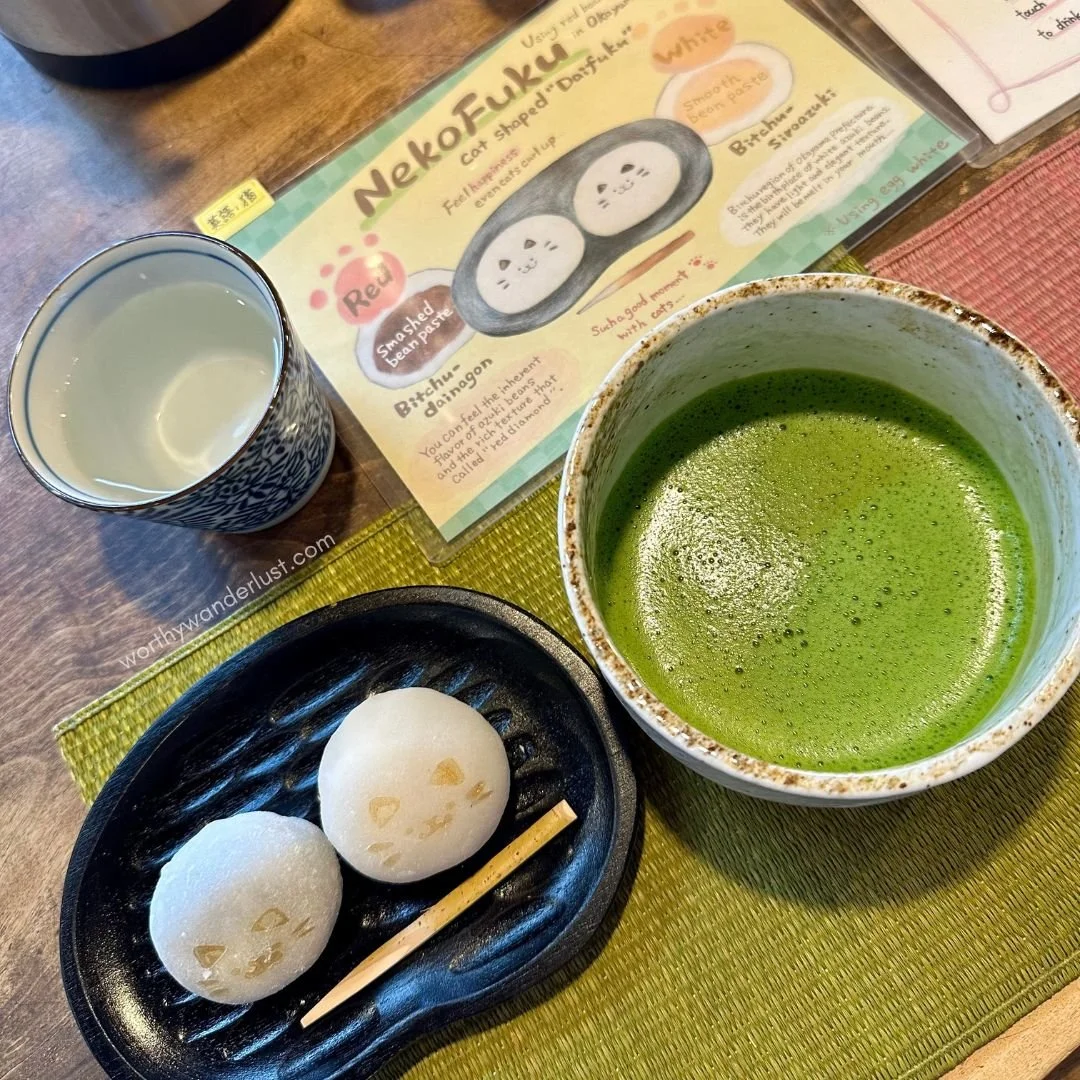
Sweets and matcha make a perfect pair!
Their famous pudding was creamy, perfectly set, and inexplicably uplifting. 100% worth the hype, it is not made for sharing (don’t make the mistake we did!).
Also, don’t miss their refreshing peach juice, served in an exquisite glass handcrafted by a local artist. We would have loved to purchase the very same glass from the nearby artisan shop; unfortunately, it was for an eye-watering amount that my mind has chosen to forget…!
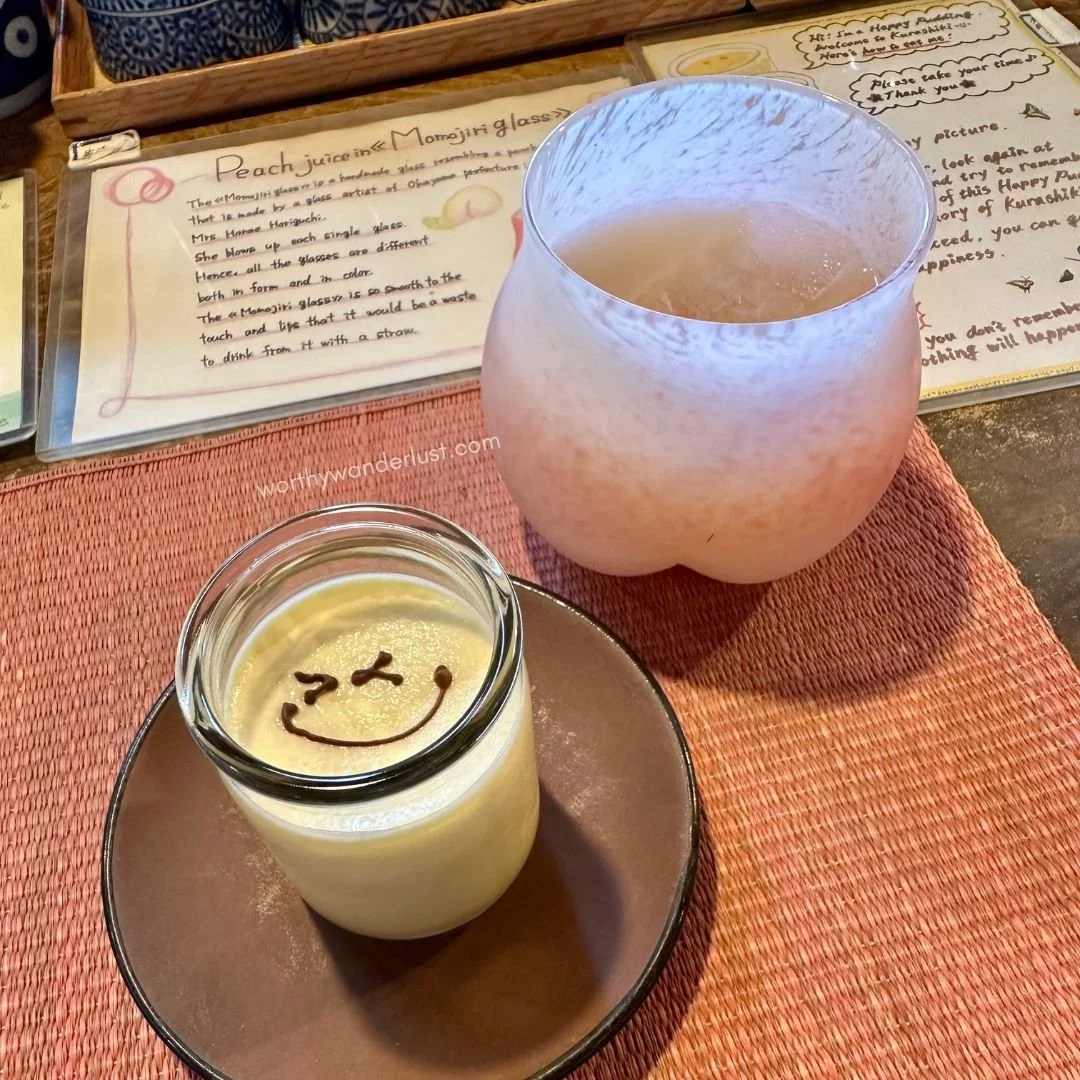
We came as pudding sceptics and left as converts! FYI their Tamago Kake Gohan (a rice dish with raw egg) is another popular dish we were eyeing.
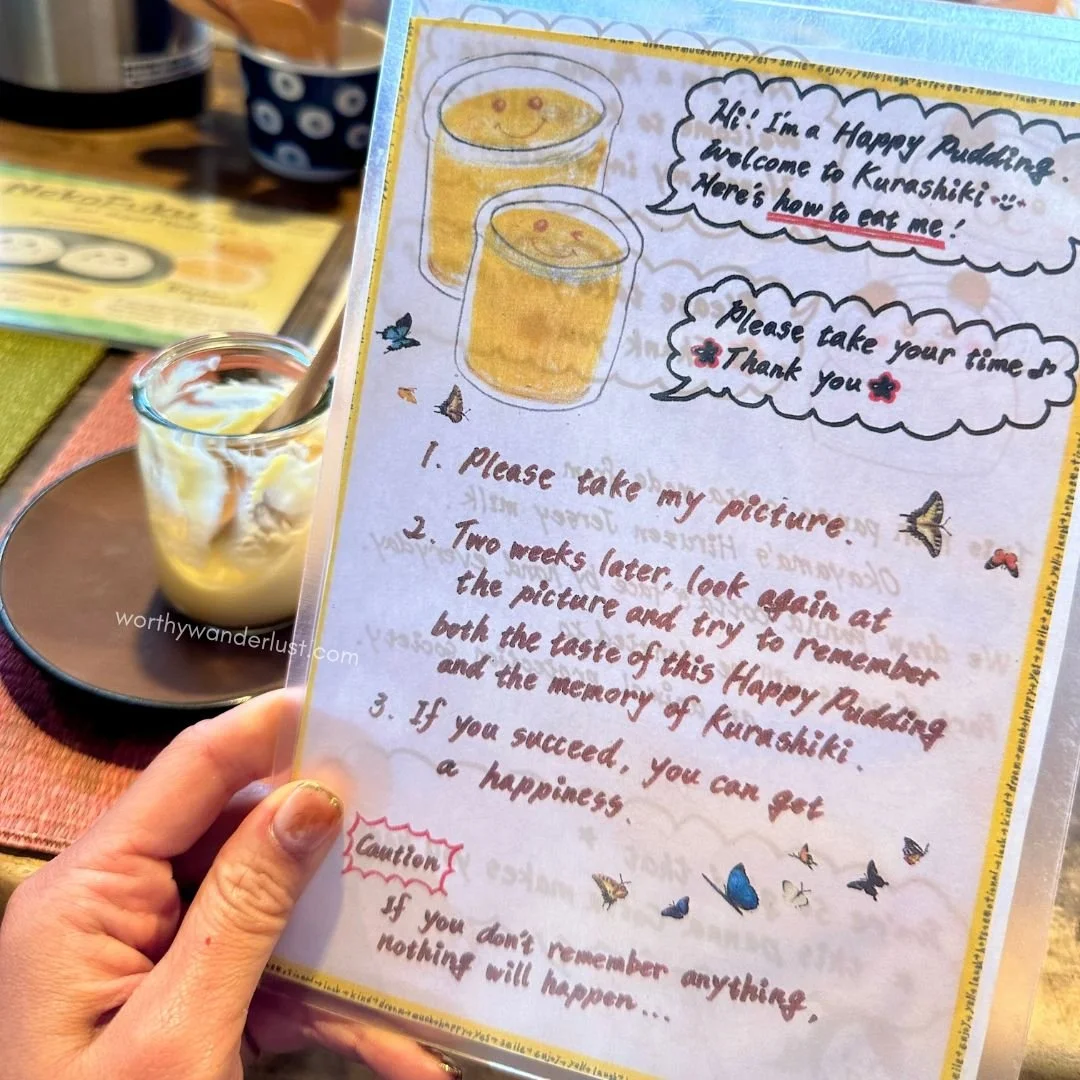
The pudding guidelines that we obediently followed. 😇
Tasting Okayama’s flavours at Toraiya
If you won’t be exploring more of Okayama, Toraiya is a great place to sample some of the region’s local specialities like kibi soba (buckwheat noodles made with locally grown takakibi, a type of sorghum) and chiya wagyu (Okayama’s prized native beef).
It was a satisfying meal to end an eventful day, though it was hard to beat the sheer joy the happy pudding gave us!
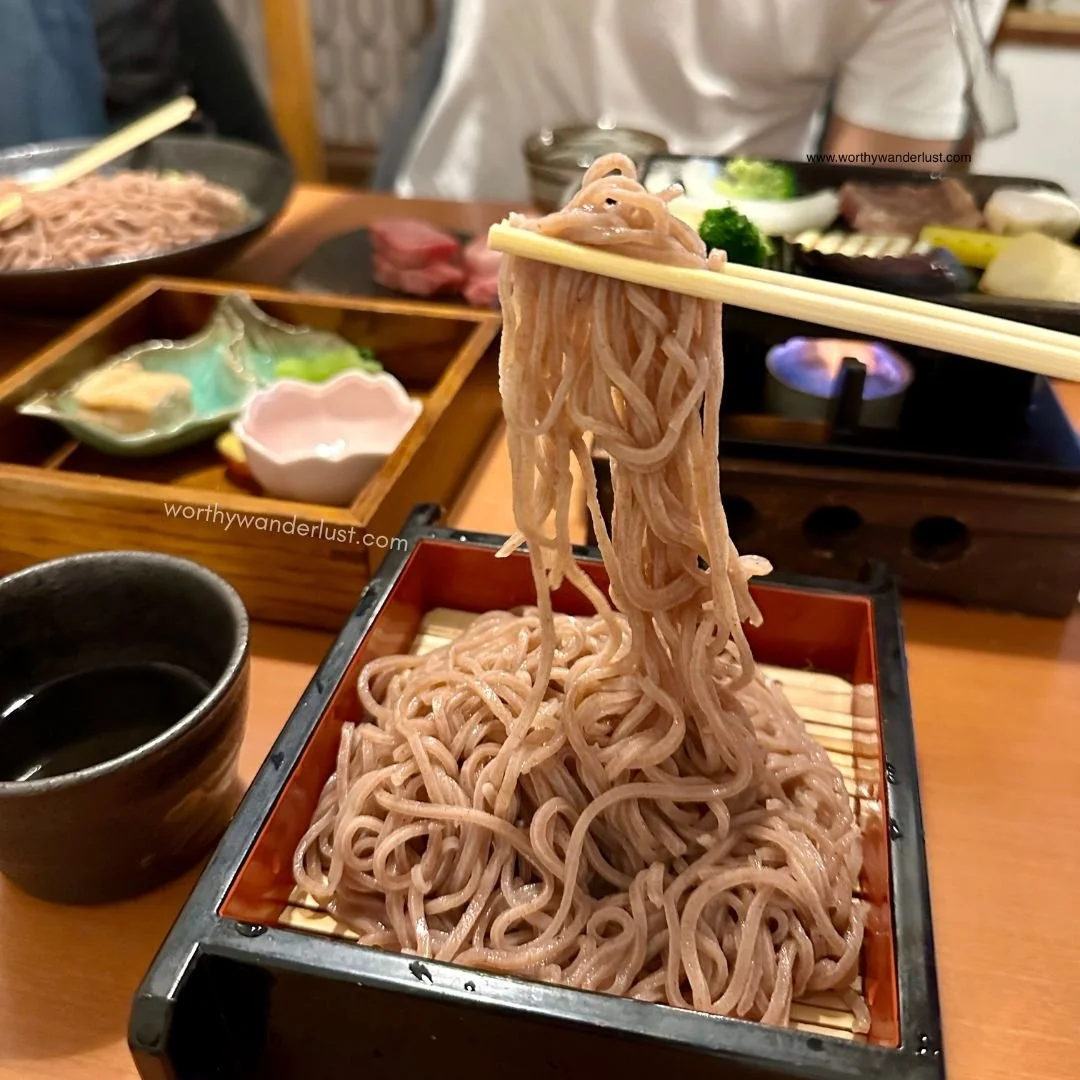
If it’s made from buckwheat, I’m going to assume it’s healthy! 😇
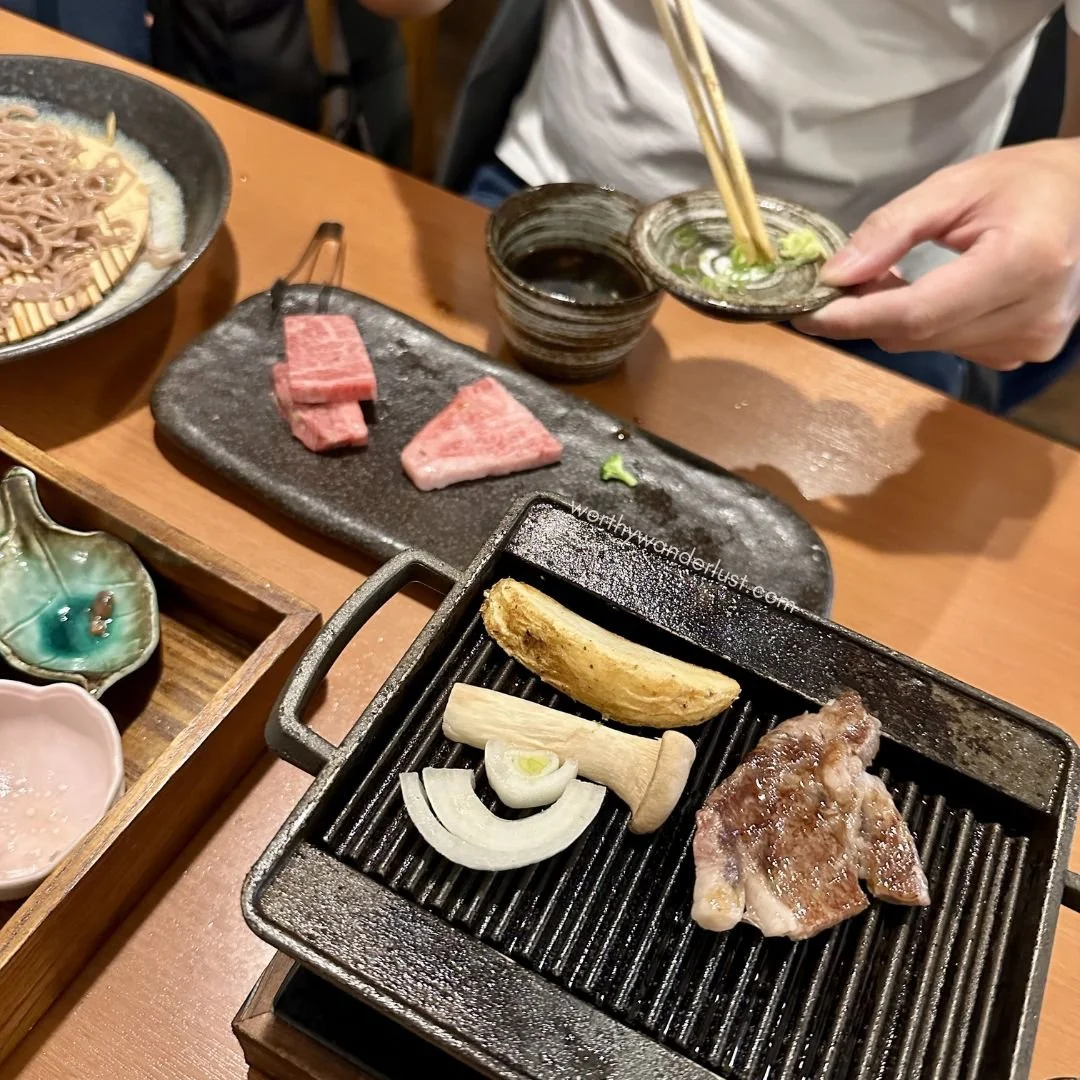
Getting my wagyu fix! 🙌🏼
Four. Where to stay in Kurashiki - my top value pick
We stayed a night at Royal Park Hotel, which is a quick 10-minute walk from Kurashiki train station and a solid choice that punches above its price point.
The rooms are compact (in the classic Japanese hotel way), clean and well-designed with details like denim cushion covers and artwork that pays homage to the city’s heritage.
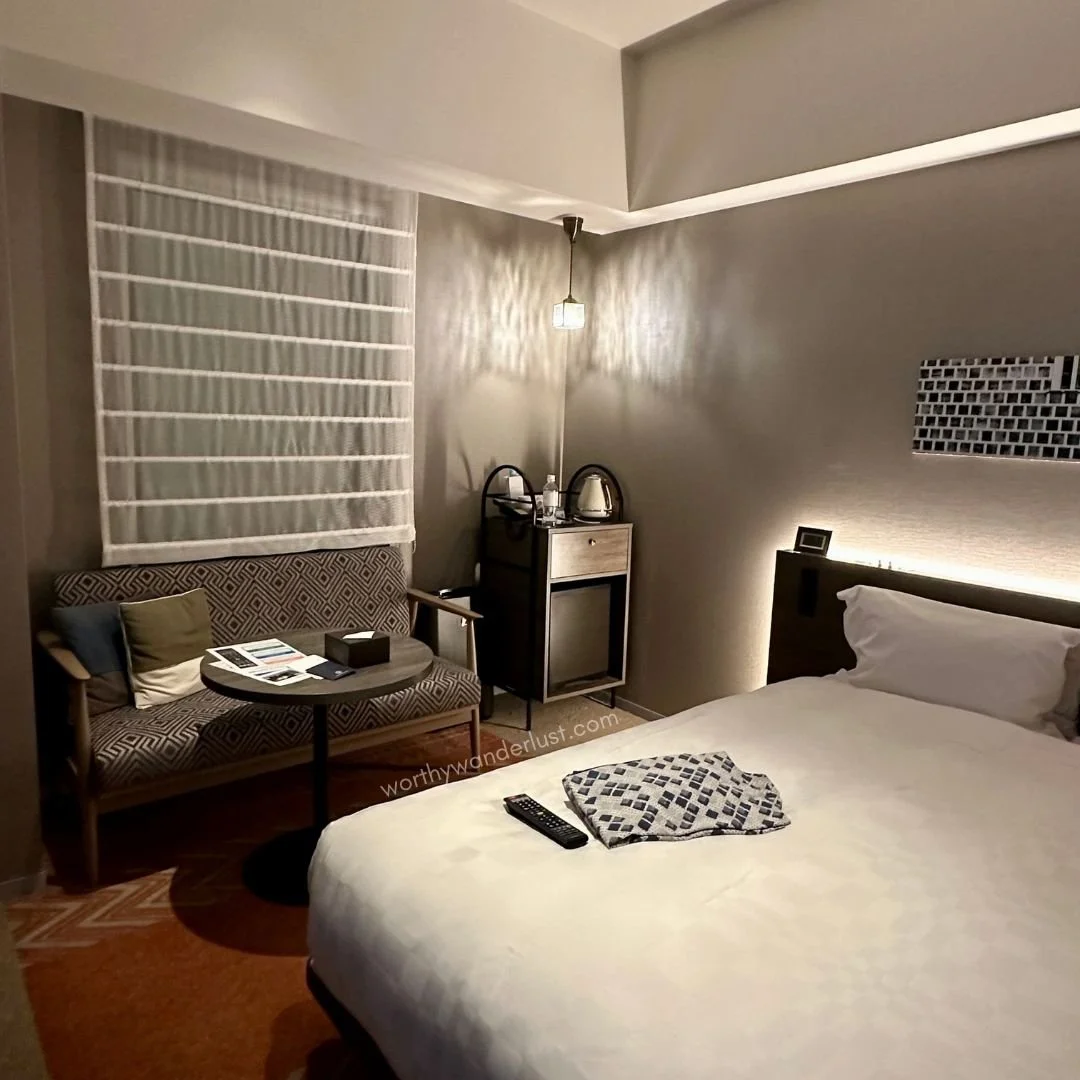
Our cosy room for the night. One of the highlights was… monitoring the progress of our laundry wash from the TV in the room!
Our stay was sweetened with perks like sake tasting (chargeable after the first cup) and complimentary tea, coffee, and juices at a spacious lounge.
There’s also a billiard table, a small workout room and, best of all, an onsen for relaxing after a day of sightseeing (enough said, I know!).
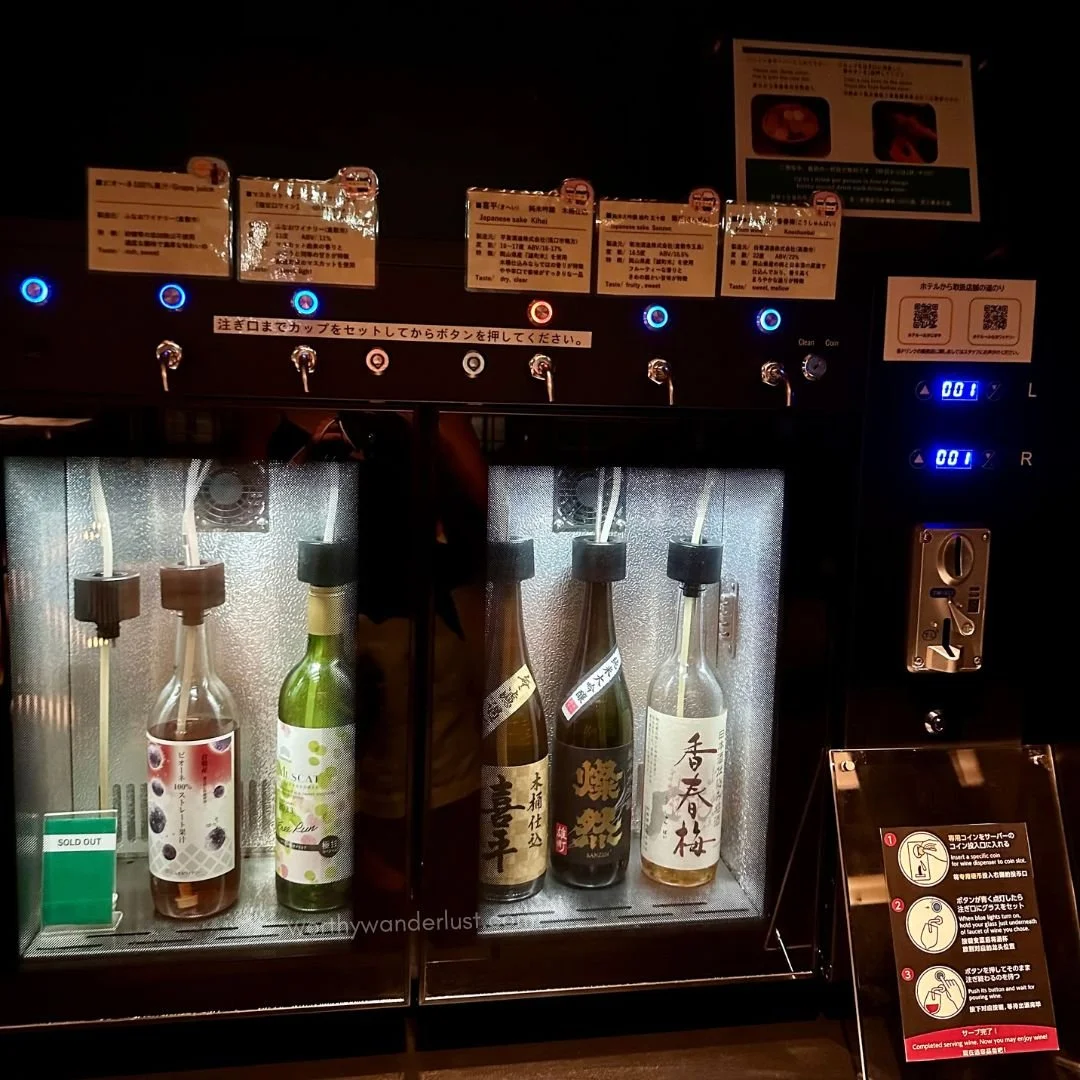
Sake tasting in the hotel lobby - yes please! 🍶
The expansive city view from the terrace is another standout feature of the hotel. It’s a pity we didn’t have time for breakfast there; it would have been a lovely place to have our final meal in the city!
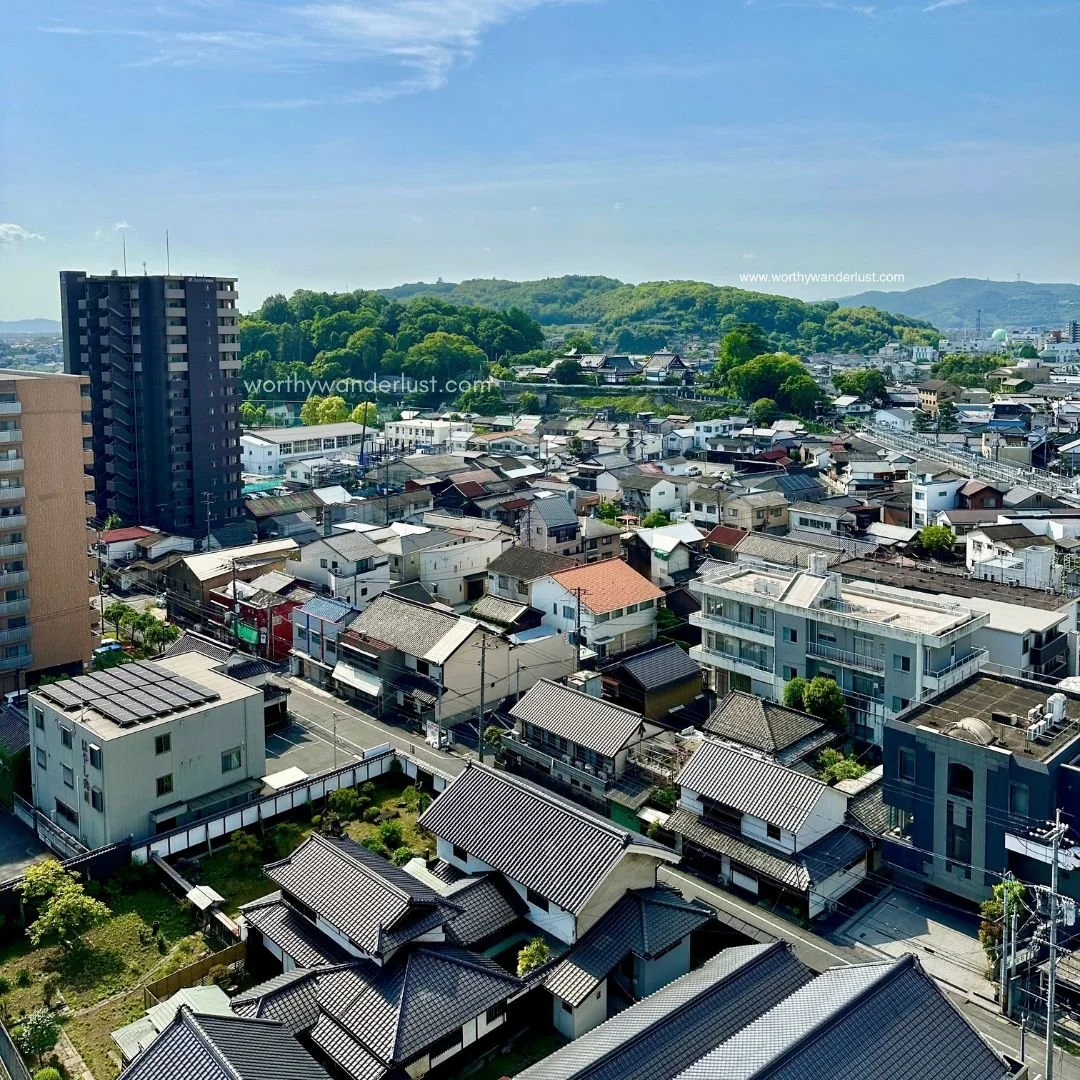
The terrace view that made us wish we’d stayed for breakfast.
WoWa’s Luxe List
For a truly special stay, Ryokan Kurashiki sits in an entirely different category. Located right in the heart of the historical area and housed in a former Edo-period sugar storehouse, this intimate ryokan offers atmospheric rooms with traditional features, seasonal kaiseki meals, and a tranquil private bath.
This luxury experience is available through Wabunka, a platform that works with local Japanese artisans and businesses to create private, immersive experiences that are usually difficult for travellers to access. I haven’t had the pleasure of staying there myself, but it would be an absolute dream!
Five. Getting to and around Kurashiki
Getting there
Kurashiki is a les than 20 minutes away by local JR train (San-yo Line) from Okayama. Okayama city itself is well-connected, being ~45 mins from Shin-Osaka and ~35 mins from Hiroshima via Shinkansen (bullet train).
If you’re coming from further afield or on a budget, you may wish to consider the slower local trains, or highway buses that run directly to Kurashiki Station.
Getting around
The main tourist attractions are in the pedestrian-friendly Bikan Historical Quarter, which is about a 15-minute stroll south from Kurashiki Station.
For a trip to Kojima, the city’s denim district, take a local train from Kurashiki to Okayama, then the JR Seto-Ohashi Line to Kojima station (~45 mins in total). Local buses also run directly there; check with a tourist information centre for current schedules.
For more details on access options and a handy map of the quarter, visit Kurashiki's official tourism website.
Final thoughts: a worthy destination
Kurashiki has been officially recognised as a ‘City of Japan Heritages’, and it’s easy to understand why after spending just a day there.
Wandering through its compact yet captivating historical quarter, I found myself admiring not just the time-honoured architecture, but the deep pride that local artisans clearly take in their craft—whether it's sake, denim, or a perfectly set pudding.
Best of all, it was the rare kind of place that felt vibrant without feeling rushed. I have zero regrets adding it to our western Japan itinerary!
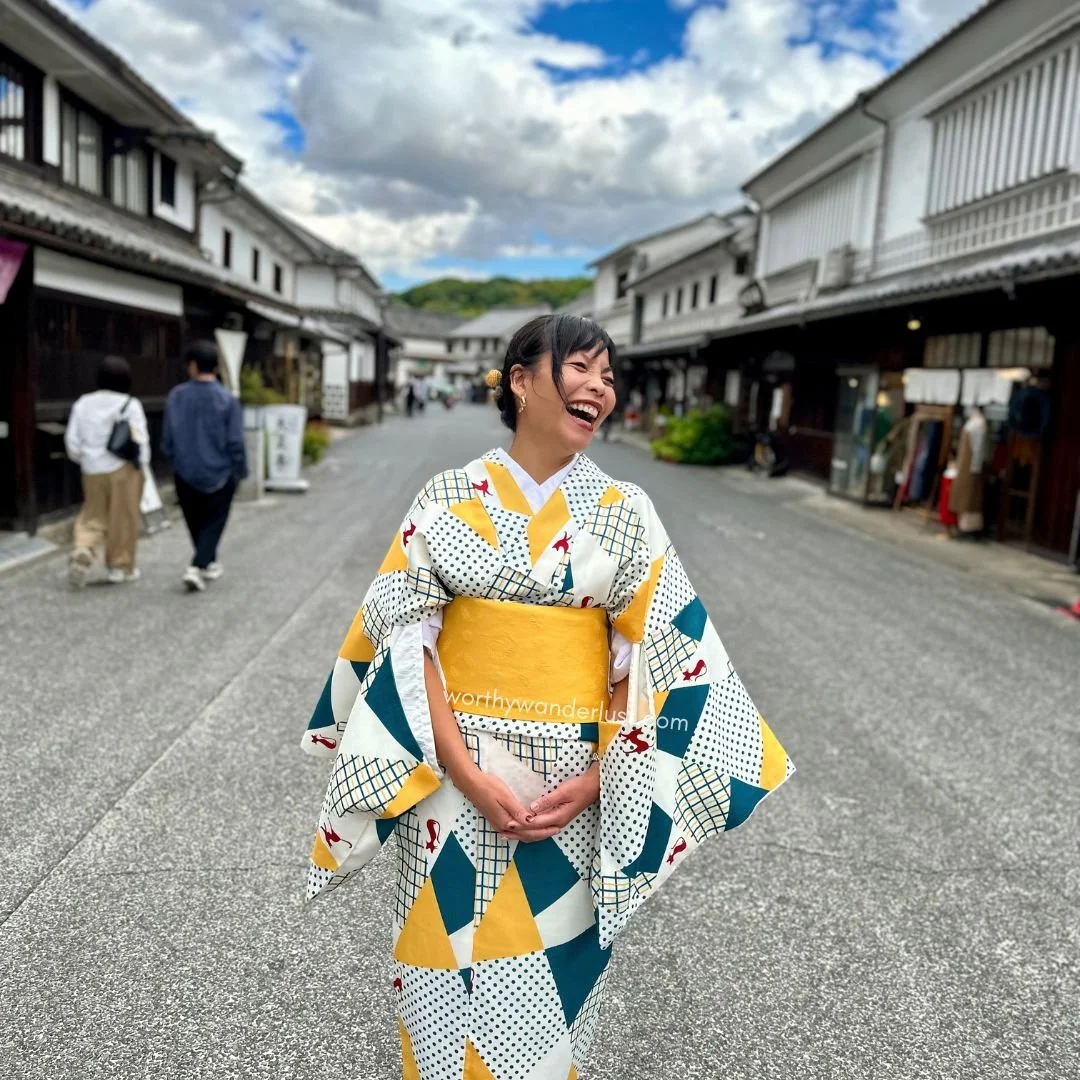
Clearly, Kurashiki and I got along very well! 😄
FAQs
How long should I spend in Kurashiki? At least a night for a taste of the city and preferably 2 nights for a more relaxed trip. We spent 1.5 days and found it just a touch rushed for both exploring and shopping. Allow more time for a visit to a museum or Kojima, the denim district.
How can I fit Kurashiki into my itinerary? You can stop by Kurashiki when travelling from Hiroshima Prefecture to the Kansai region (e.g. Himeji or Osaka) or Kagawa Prefecture (e.g. Naoshima or Takamatsu), or the opposite direction.
What is the best way to get to Kurashiki? If you’re travelling from a major city, take the shinkansen (bullet train) to Okayama Station then a local JR train to Kurashiki (<20 mins from Okayama).
Which area of Kurashiki should I stay in? Stay near the main train station for good value mid-range options (like Royal Park Hotel, where we stayed), or in the Bikan Historical Quarter itself for a more atmospheric (and possibly more expensive) stay.
What are the must-dos in Kurashiki? Exploring the Bikan Historical Quarter, strolling along Kurashiki River, and checking out local artisan goods like denim products. Also, don’t miss the happy pudding at Yuurin-an!
Are there any luxury or exclusive experiences in Kurashiki? Through Wabunka, you can access experiences like a luxurious stay at Ryokan Kurashiki and an exclusive denim experience in Kojima. I haven’t done either myself, but reckon they are dream-list worthy for a special treat or occasion!
Thanks for dropping by my website! Your support means a lot and encourages me to keep creating and sharing helpful content. Discover more value-packed Japan adventures on my blog or @worthy.wanderlust.